
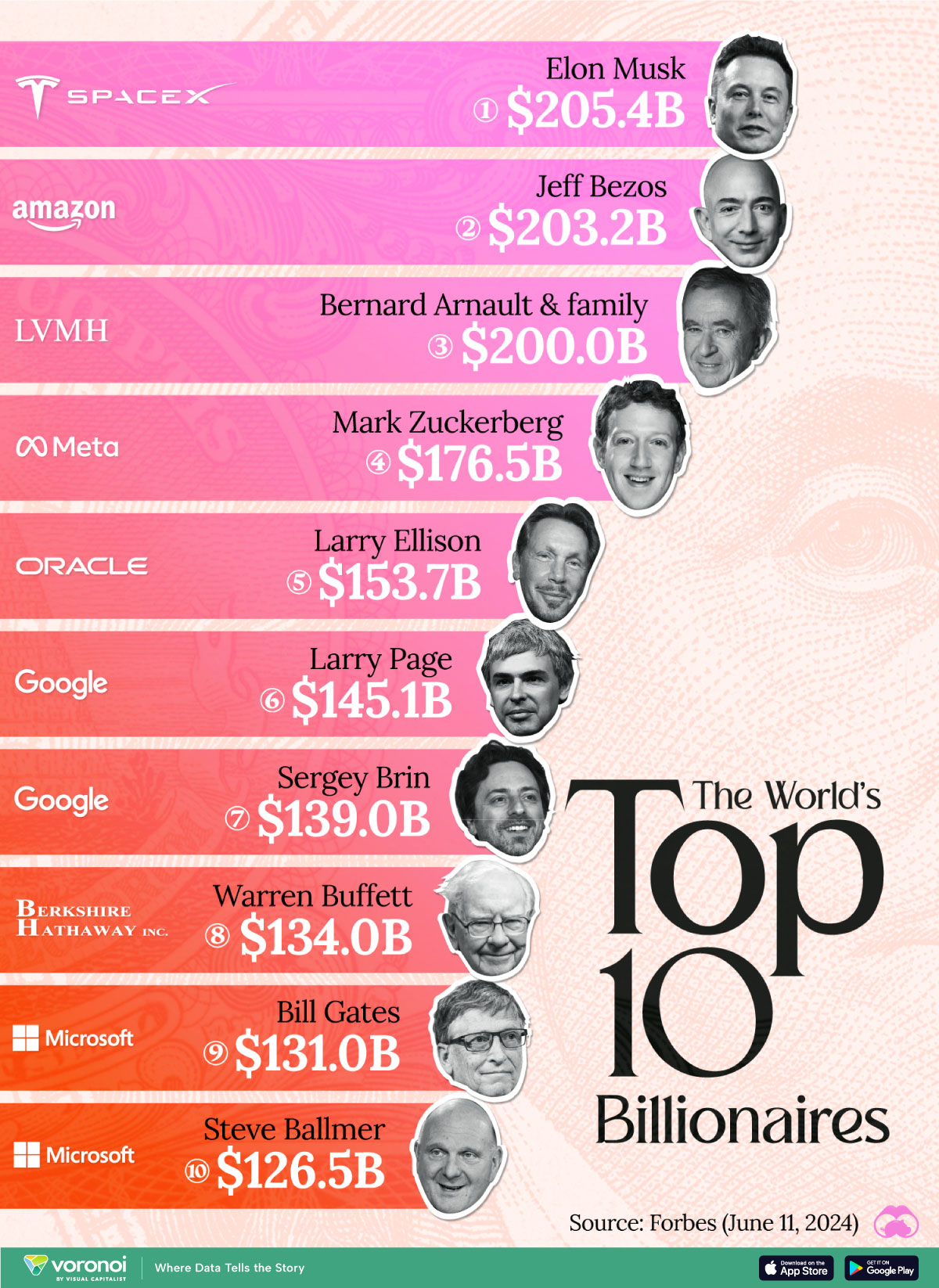
Billionaire Bloodbath: The Top 10 Richest People in the World, 2024
Introduction
Ever wondered who’s swimming in the deepest end of the money pool? Year after year, the list of the world’s richest individuals fascinates us. We dissect their empires, marvel at their innovations, and maybe, just maybe, daydream about joining their ranks (even if it’s just for a fleeting moment). But beyond the glitz and glamour, these titans of industry wield significant influence, shaping economies, technologies, and even the very fabric of our society. So, who are the reigning monarchs of wealth in 2024, and what’s driving their fortunes? Let’s dive in, shall we?
The Usual Suspects (and a Few Surprises)
This year’s list is a mix of familiar faces and a few rising stars. While the rankings may fluctuate based on market conditions and investment performance, the top echelon typically consists of tech moguls, luxury brand giants, and visionary investors. Think Elon Musk, Jeff Bezos, Bernard Arnault, Bill Gates – you know the drill.
But here’s the thing: the real story isn’t just about who’s on the list, it’s about how they got there and the broader implications of such concentrated wealth. What trends are propelling their success? What challenges are they facing? And perhaps most importantly, what impact are their immense fortunes having on the world around us?
Short-Term Impacts: Market Mania and Philanthropic Power
In the short term, the actions of these billionaires can send ripples through the financial markets. A single tweet from Musk, a strategic acquisition by Bezos, or an innovative product launch from Apple (under Tim Cook) can send stocks soaring or plummeting, impacting millions of investors, big and small. They are market movers, plain and simple.
Beyond the market frenzy, these individuals also have the power to make significant philanthropic contributions. From funding climate change research to supporting educational initiatives, their charitable endeavors can address pressing global issues and improve the lives of countless individuals. The Bill & Melinda Gates Foundation, for example, has been instrumental in combating diseases, improving global health, and promoting education worldwide. However, the effectiveness and impact of such philanthropy are constantly under scrutiny.
Long-Term Implications: Wealth Inequality and Societal Shifts
The accumulation of such vast wealth raises critical questions about wealth inequality and its long-term consequences. The concentration of resources in the hands of a few can exacerbate social divisions, limit economic opportunities for others, and even undermine democratic institutions. The gap between the super-rich and the rest of the population continues to widen, leading to social unrest and political instability in some regions.
Moreover, the decisions made by these billionaires can shape the future of technology, innovation, and even our environment. Their investments in artificial intelligence, renewable energy, and space exploration will have profound and lasting effects on society. Whether those effects are positive or negative depends largely on the ethical considerations and long-term vision guiding their decisions.
Explanation of the Problem: Concentration of Power and Resources
The concentration of wealth in the hands of a few individuals presents several pressing issues:
- Economic Instability: Excessive wealth accumulation can lead to market distortions and financial instability, as the decisions of a few individuals can significantly impact global markets.
- Social Inequality: The widening wealth gap can exacerbate social divisions, limiting opportunities for marginalized communities and undermining social cohesion.
- Political Influence: Wealthy individuals and corporations can exert undue influence on political processes, leading to policies that favor their interests over the needs of the general public.
- Reduced Innovation: Concentrated wealth can stifle innovation as it creates barriers to entry for new entrepreneurs and businesses, limiting competition and economic dynamism.
Solutions: Leveling the Playing Field
Addressing these challenges requires a multifaceted approach that includes policy reforms, increased transparency, and a shift in cultural attitudes towards wealth and inequality. Here are some practical solutions:
- Progressive Taxation: Implement progressive tax policies that ensure the wealthiest individuals and corporations contribute a fair share to society. This revenue can be used to fund essential public services, reduce inequality, and invest in education and infrastructure.
- Example: The Nordic countries, such as Denmark and Sweden, have implemented progressive tax systems that have helped reduce income inequality and provide robust social safety nets.
- Strengthening Labor Rights: Empower workers through collective bargaining and fair wage policies. This can help reduce income inequality and improve economic security for working families.
- Case Study: Germany’s co-determination model, where workers have representation on company boards, has led to better wages, working conditions, and overall economic stability.
- Promoting Entrepreneurship: Support small businesses and entrepreneurs through access to capital, mentorship programs, and regulatory reforms. This can foster economic growth and create more opportunities for people to build wealth.
- Example: Singapore’s pro-business environment, streamlined regulations, and support for startups have made it a hub for innovation and entrepreneurship.
- Enhancing Financial Transparency: Increase transparency in financial markets and corporate governance to prevent tax evasion, money laundering, and other illicit activities that contribute to wealth concentration.
- Case Study: The United States’ Foreign Account Tax Compliance Act (FATCA) has helped improve transparency in international financial transactions and combat tax evasion.
- Investing in Education: Provide access to quality education for all, regardless of socioeconomic background. Education is a powerful tool for upward mobility and can help reduce income inequality over the long term.
- Example: Finland’s education system, which emphasizes equity, access, and teacher quality, has consistently produced high levels of educational achievement.
Alternative Approaches: Rethinking Wealth and Success
In addition to policy reforms, it is important to challenge the cultural norms and attitudes that perpetuate wealth inequality. This includes:
- Promoting Purpose-Driven Businesses: Encourage businesses to prioritize social and environmental impact alongside profit, creating a more sustainable and equitable economy.
- Supporting Ethical Investing: Encourage investors to consider the social and environmental impact of their investments and support companies that align with their values.
- Fostering a Culture of Sharing: Promote a culture of sharing and collaboration, where individuals and organizations are encouraged to share resources, knowledge, and ideas for the common good.
Conclusion: A Future of Shared Prosperity
While the concentration of wealth among the world’s richest individuals presents significant challenges, it also offers opportunities for positive change. By implementing practical solutions, fostering a culture of collaboration, and challenging the status quo, we can create a more equitable and prosperous future for all.
The journey toward a more balanced and fair society requires collective action, visionary leadership, and a steadfast commitment to ethical principles. It’s not just about redistributing wealth, but about creating systems that ensure opportunity for everyone to thrive, regardless of their background or circumstances. Let’s embrace this challenge with optimism and determination, knowing that a more just and equitable world is within our reach.