
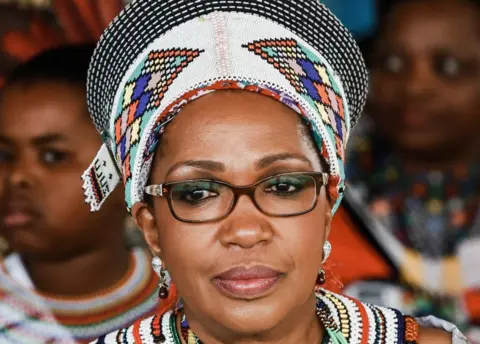
Mantfombi Dlamini:Queen Regent’s Unforeseen Reign and Lingering Legacy
Introduction
Imagine a script suddenly rewritten mid-performance.That’s a bit like what happened in the Zulu Royal Family in early 2021.With the passing of King Goodwill Zwelithini kaBhekuzulu,a pillar of Zulu tradition and a figure of immense cultural significance,the spotlight shifted unexpectedly to his Great Wife,Queen Mantfombi Dlamini Zulu.Appointed Queen Regent,she found herself thrust into a position of power and responsibility that,though rooted in tradition,carried unprecedented weight in a rapidly changing world.
Her reign,sadly,was tragically short – lasting only a few weeks before her own passing.Yet,in that brief period,Queen Mantfombi’s actions,however seemingly small,sent ripples through the Zulu nation,raising questions about succession,tradition,and the role of women in a deeply patriarchal society.This isn’t just about royal drama;it’s about the intersection of ancient customs and modern realities,and the lasting impact even a fleeting reign can have.So,what exactly made Queen Mantfombi’s time on the throne so significant,and what lingering legacy does she leave behind?Let’s delve in.
The Unforeseen Ascension:
King Goodwill Zwelithini,who reigned for nearly half a century,left behind a complex web of tradition and expectation.His will designated Queen Mantfombi,a princess of the eSwatini royal house,as Regent.This appointment wasn’t just ceremonial.It placed her in temporary control of the Zulu nation until a successor could be named.
The reasoning behind this choice was rooted in custom:Queen Mantfombi was the Great Wife,chosen specifically for her royal lineage to ensure the purity of the royal bloodline and produce the heir.Her position was therefore critical to maintaining the integrity of the succession process.However,the suddenness of the King’s passing and the brevity of the Queen Regent’s reign immediately created a power vacuum.
Short-Term Turmoil and Long-Term Questions:
The immediate aftermath of King Zwelithini’s death and Queen Mantfombi’s subsequent appointment was marked by uncertainty and contestation.Several potential heirs emerged,leading to legal challenges and public disagreements within the royal family.These disputes threatened to destabilize the nation,a nation already grappling with socio-economic challenges.
The short-term impact was palpable:increased political tensions,questioning of the traditional succession processes,and a general sense of unease within the Zulu community.But the long-term implications are even more profound.Queen Mantfombi’s reign,however brief,shone a light on the complex issues surrounding succession within traditional structures.It forced a conversation about the roles and rights of women within these systems,and whether traditional practices are adequately equipped to navigate the complexities of the 21st century.Her appointment,even if only temporary,highlighted the potential for female leadership within a system historically dominated by men.
Navigating the Legacy:Practical Solutions and Alternative Approaches:
So,how can the Zulu nation and other communities facing similar succession challenges navigate these complexities and build a more stable and inclusive future?Here are a few practical solutions:
- Modernizing Succession Laws:This doesn’t necessarily mean abandoning tradition,but rather adapting it to the modern context.One approach could be to establish a clearer,codified set of rules for succession,minimizing ambiguity and reducing the potential for disputes.This could involve incorporating elements of primogeniture(eldest child inherits)while retaining aspects of traditional consultation and consensus-building.
- Example:Some European monarchies have successfully transitioned to gender-neutral succession laws,allowing the eldest child,regardless of gender,to inherit the throne.This provides a model for how traditional systems can adapt to modern values without completely abandoning their heritage.
- Empowering Women in Traditional Structures:Queen Mantfombi’s appointment,although ultimately brief,demonstrated the potential for female leadership.Actively involving women in decision-making processes within traditional councils and institutions can bring new perspectives and ensure that the interests of all members of the community are considered.
- Case Study:The rise of female chiefs in various African countries demonstrates the positive impact of women in leadership roles.These women have often championed issues such as education,healthcare,and economic empowerment for women and girls,leading to significant improvements in their communities.
- Promoting Open Dialogue and Reconciliation:Disagreements are inevitable,especially during times of transition.Creating platforms for open dialogue and reconciliation within the royal family and the broader community is crucial for fostering unity and resolving conflicts peacefully.This could involve establishing mediation committees or holding public forums where different perspectives can be heard and addressed.
- Example:The South African Truth and Reconciliation Commission,while focused on national issues,provides a model for how open dialogue and forgiveness can help heal divisions and build a more unified society.
Alternative Approaches:
- Establishing a Regency Council:Instead of placing the entire burden of regency on one individual,a council composed of respected elders and legal experts could be formed to collectively manage the transition period.This distributes the power and responsibility,reducing the risk of individual bias or abuse of power.
- Implementing a Structured Leadership Development Program:Identify potential future leaders early on and provide them with comprehensive training in governance,diplomacy,and cultural preservation.This ensures that future leaders are well-prepared to assume their responsibilities and navigate the complexities of modern leadership within a traditional context.
- Formalizing the Role of the Queen Mother:While Queen Mantfombi’s position was primarily as Regent,a more formal and defined role for the Queen Mother within the traditional system could provide a valuable source of wisdom and guidance,ensuring continuity and stability during times of transition.
Conclusion:A Legacy of Possibility:
Queen Mantfombi Dlamini’s reign,though short,served as a powerful reminder that even in the most deeply entrenched traditions,there is room for evolution and adaptation.Her story isn’t one of tragedy alone;it’s a story of potential,of a system challenged and forced to confront its own limitations.By learning from the challenges and implementing practical solutions,the Zulu nation and other traditional communities can ensure a more stable,inclusive,and prosperous future.The lingering legacy of Queen Mantfombi isn’t just about the complexities of succession;it’s about the possibility of progress,the empowerment of women,and the enduring strength of tradition when it is tempered with wisdom and a commitment to inclusivity.Now is the time to embrace these lessons,to engage in open dialogue,and to build a future where tradition and modernity can coexist harmoniously.Let Queen Mantfombi’s brief reign serve as a catalyst for positive change,inspiring us all to embrace a future where tradition empowers,rather than restricts,the potential of every individual.