
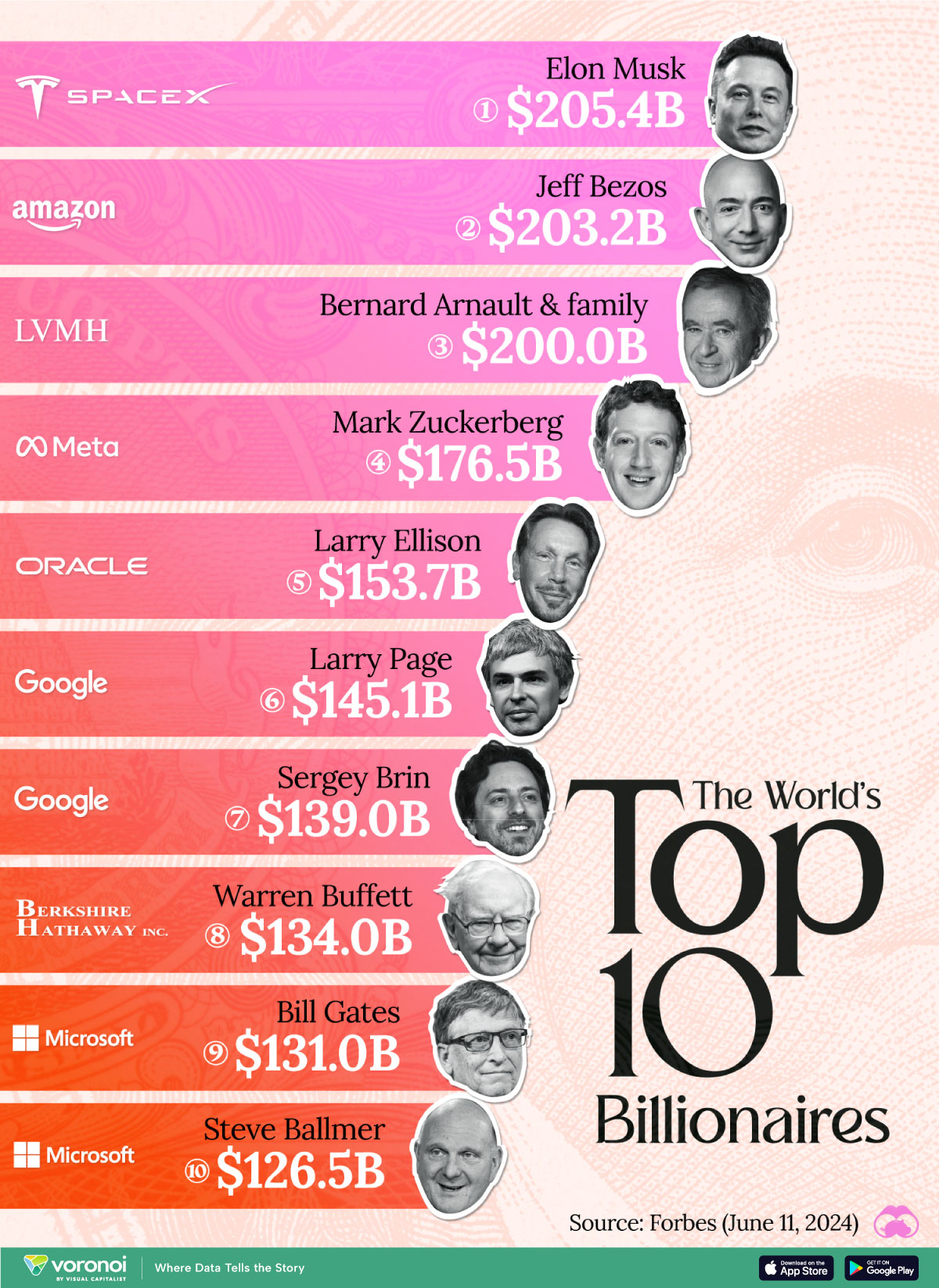
Billionaire Boom: The Top 10 Richest Men on Earth in 2024
Introduction
Ever wondered what it’s like to have more money than entire countries? Well, let’s take a peek into the exclusive club of the ultra-wealthy – specifically, the top 10 richest men on the planet as of 2024. Forget flipping through magazines; we’re diving into their empires, their quirks, and the ripple effects their immense wealth has on, well, pretty much everything.
These aren’t just names on a Forbes list; they’re titans shaping technology, influencing global economies, and, let’s be honest, sometimes sparking some serious debate about wealth inequality. So, grab your virtual boarding pass, because we’re about to embark on a journey to the top of the financial food chain. We’ll break down who they are, how they made their fortunes, and, more importantly, what the existence of this concentration of wealth *really* means for the rest of us.
The Usual Suspects (and Maybe a Few Surprises)
While the rankings might shift slightly from month to month depending on the stock market’s mood swings, the usual suspects generally dominate the top spots. Think Elon Musk with his electric cars and space ambitions, Jeff Bezos and his everything store, and Bernard Arnault, the master of luxury goods. Bill Gates, despite his philanthropic endeavors, is never far from the conversation, and Mark Zuckerberg continues to reign over the social media landscape.
But don’t think it’s just a rehashing of the same old stories. These individuals are constantly evolving, their businesses are morphing, and their impact is ever-expanding. What’s fascinating is not just the sheer number of zeroes in their bank accounts, but how they leverage their influence and the long shadow it casts.
The Good, The Bad, and The…Complicated: The Impacts of Extreme Wealth
So, what’s the big deal? Why should we care about these billionaires beyond the sheer spectacle of it all? Because their existence has campaquilasyrup.com profound and complex ramifications, both positive and negative, that touch all our lives.
- The Upside: These individuals are often at the forefront of innovation. Musk’s push for electric vehicles and space exploration, for example, is undeniably driving technological advancements. Bezos revolutionized e-commerce, and Gates has poured billions into combating global diseases. Their risk-taking and investments can create jobs, stimulate economic growth, and solve pressing global challenges. They are also major drivers of philanthropic activity, which supports numerous non-profit organizations and causes across the globe.
- The Downside: The concentration of wealth in the hands of a few raises critical questions about economic inequality. Studies have shown that extreme wealth disparities can lead to social unrest, political instability, and reduced opportunities for those lower down the economic ladder. There is a valid concern that such immense power can be used to influence political decisions and policies in ways that benefit the ultra-wealthy at the expense of the general public. The more wealth accumulates at the top, the harder it becomes for others to climb the economic ladder, fostering a sense of unfairness and disenfranchisement.
- The Long-Term Implications: Looking ahead, the trajectory of wealth concentration poses significant challenges. The rise of automation and artificial intelligence could exacerbate existing inequalities, further concentrating wealth in the hands of those who own and control these technologies. Unless proactive measures are taken, this trend could lead to a future where a small elite controls the vast majority of resources, potentially undermining social cohesion and democratic principles.
Bridging the Gap: Practical Solutions and Alternative Approaches
Alright, so we’ve established the problem – what can we do about it? This isn’t about demonizing billionaires; it’s about creating a fairer system where everyone has a chance to thrive. Here are some practical solutions and alternative approaches:
- Progressive Taxation: This one’s a classic, but for a reason. Implement a tax system where higher earners pay a larger percentage of their income in taxes. This revenue can then be used to fund social programs, education, and infrastructure, creating more opportunities for those in need.
- Example: Many European countries have higher top marginal tax rates than the United States, and their social safety nets tend to be more robust.
- Wealth Tax: A wealth tax targets the accumulated assets of the ultra-rich, rather than just their income. This could include things like stocks, bonds, real estate, and other valuable assets. While controversial, it could generate significant revenue and address wealth inequality directly.
- Case Study: The debate surrounding a wealth tax has been ongoing in various countries, including France and the United States. While the implementation faces challenges, the potential impact on wealth redistribution is significant.
- Strengthening Labor Unions: Empowering workers through stronger unions can lead to higher wages, better benefits, and improved working conditions. This can help to reduce the gap between the rich and the working class.
- Example: Unionized workers in the automotive industry often earn significantly more than non-unionized workers in similar roles.
- Investing in Education: Providing access to quality education for all, regardless of their socioeconomic background, is crucial for promoting upward mobility. This includes early childhood education, affordable college tuition, and vocational training programs.
- Example: Countries like Finland, which prioritize education and provide free tuition to students, tend to have lower levels of income inequality.
- Promoting Entrepreneurship: Creating an environment that supports small businesses and entrepreneurship can help to generate wealth and create jobs. This includes access to capital, mentorship programs, and streamlined regulations.
- Case Study: The success of Silicon Valley is often attributed to its entrepreneurial ecosystem, which fosters innovation and supports startups.
- Addressing Tax Havens: Closing loopholes and cracking down on tax havens can prevent the ultra-rich from avoiding taxes, ensuring that they contribute their fair share to society.
- Example: International efforts to combat tax evasion have led to increased transparency and cooperation among countries.
- Corporate Governance Reform: Encouraging companies to prioritize stakeholder value over shareholder value can lead to more equitable distribution of profits and benefits.
- Example: Some companies are experimenting with employee ownership models, which give workers a stake in the company’s success.
Choosing Your Path: It’s a Collective Effort
The beauty of these solutions is that they aren’t mutually exclusive. A combination of approaches is likely the most effective way to address wealth inequality and create a more just society.
- Think Globally, Act Locally: You can support policies that promote economic fairness at the local, national, and international levels.
- Support Businesses with Ethical Practices: Choose to patronize companies that prioritize fair wages, sustainable practices, and community involvement.
- Educate Yourself and Others: Stay informed about the issues surrounding wealth inequality and engage in constructive conversations with your friends, family, and community.
- Advocate for Change: Contact your elected officials and let them know that you support policies that promote economic fairness and opportunity.
A Brighter Future: Taking Action and Staying Optimistic
The existence of billionaires isn’t inherently bad, but the vast disparity in wealth requires careful consideration and proactive solutions. By understanding the impacts and embracing practical approaches, we can work towards a more equitable future where everyone has the opportunity to thrive. It’s not about tearing down the wealthy; it’s about building a society where success is attainable for all, not just a select few.
So, let’s take action, stay optimistic, and work together to create a world where prosperity is shared more equitably. The future is not predetermined, and by taking proactive steps, we can shape a society where everyone has the chance to reach their full potential. The journey towards a more equitable future starts with awareness, action, and a belief in the power of collective change. Let’s get started.