
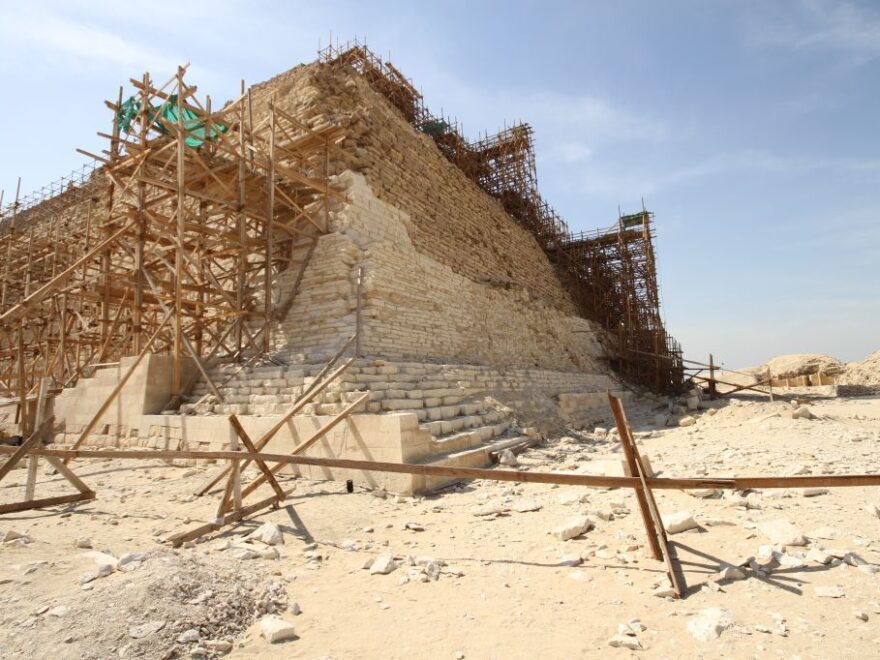
Engineers Unveil New Theory on the Construction of Egypt’s First Pyramid
A team of engineers has put forth a groundbreaking new theory on the construction of Egypt’s first pyramid, the Step Pyramid of Djoser, which has long puzzled historians and archaeologists. This innovative theory provides fresh insights into the methods and techniques used by ancient builders over 4,600 years ago.
The Step Pyramid of Djoser
Located in Saqqara, the Step Pyramid is considered the earliest colossal stone building in Egypt and a precursor to the later pyramids at Giza. Built during the reign of Pharaoh Djoser by his architect Imhotep, the pyramid originally stood 62 meters (203 feet) tall and consisted of six stacked mastabas (rectangular structures with flat tops and sloping sides).
The New Theory
The latest theory, proposed by a group of engineers from Cairo University, suggests that the construction of the pyramid involved an intricate system of ramps and levers, combined with a novel technique of counterweight mechanisms. According to lead engineer Dr. Hassan El-Masry, the team’s hypothesis is based on extensive analysis of ancient Egyptian texts, structural assessments, and simulations using modern engineering software.
Ramp and Counterweight Mechanism
The theory posits that builders used a series of straight and zigzagging ramps on all four sides of the pyramid, which allowed them to transport heavy limestone blocks to higher levels. Unlike previous theories that suggested the use of a single, massive ramp, this approach would have been more feasible, reducing the amount of material and labor needed to construct the ramps.
Additionally, the engineers believe that counterweight systems were employed to lift the blocks. These systems likely involved large wooden cranes equipped with counterweights, which could have been operated by teams of workers to hoist the stones into place. This technique would have significantly lessened the manual effort required, enabling the rapid assembly of the pyramid’s layers.
Implications of the Theory
If validated, this theory could revolutionize our understanding of ancient Egyptian engineering and construction techniques. It also underscores the sophistication and ingenuity of the builders, highlighting their ability to solve complex architectural challenges with the resources available to them.
Dr. El-Masry stated, “Our findings suggest that the ancient Egyptians were far more advanced in their engineering capabilities than previously thought. The use of counterweights and an efficient ramp system indicates a high level of planning and coordination.”
Reactions from the Archaeological Community
The new theory has garnered significant interest and debate within the archaeological community. Dr. Sarah Collins, an Egyptologist at the British Museum, commented, “This theory is compelling and provides a plausible explanation for some of the longstanding questions about pyramid construction. However, it will require further archaeological evidence to be widely accepted.”
Future Research
The engineering team plans to collaborate with archaeologists and Egyptologists to search for physical evidence supporting their theory. This includes examining the remaining structures and any potential remnants of the ramps or counterweight systems around the Step Pyramid site. Advanced imaging technology and excavation techniques will play a crucial role in this investigative phase.
The new theory on the construction of Egypt’s first pyramid represents a significant advancement in our understanding of ancient engineering practices. By combining historical analysis with modern engineering principles, researchers have opened up new avenues for exploring the ingenuity of one of the world’s most enigmatic civilizations. As further evidence emerges, this theory has the potential to reshape our comprehension of how the ancient Egyptians achieved their monumental architectural feats.